Three fabrics, three very different tables. On drape, light, texture and what each cloth really does across a long wedding day.
Watch a table being dressed an hour before guests arrive and you will see the difference before you can name it. One cloth falls to the floor in a single, weighted line. Another ripples where it meets the ground. A third catches the light with a faint, synthetic sheen. The fabric beneath everything sets the tone for all that is placed on top of it, and the choice is simpler than it seems. Polyester is the practical choice, crease-resistant and hard-wearing, though its quality varies enormously with the weight of the weave. Cotton is crisp and matte, the classic of the formal banqueting table. Linen, woven from flax, has the weight, texture and depth that make a table look considered rather than covered, which is why it has become the cloth of choice for design-led weddings.
Polyester: it all comes down to the weave
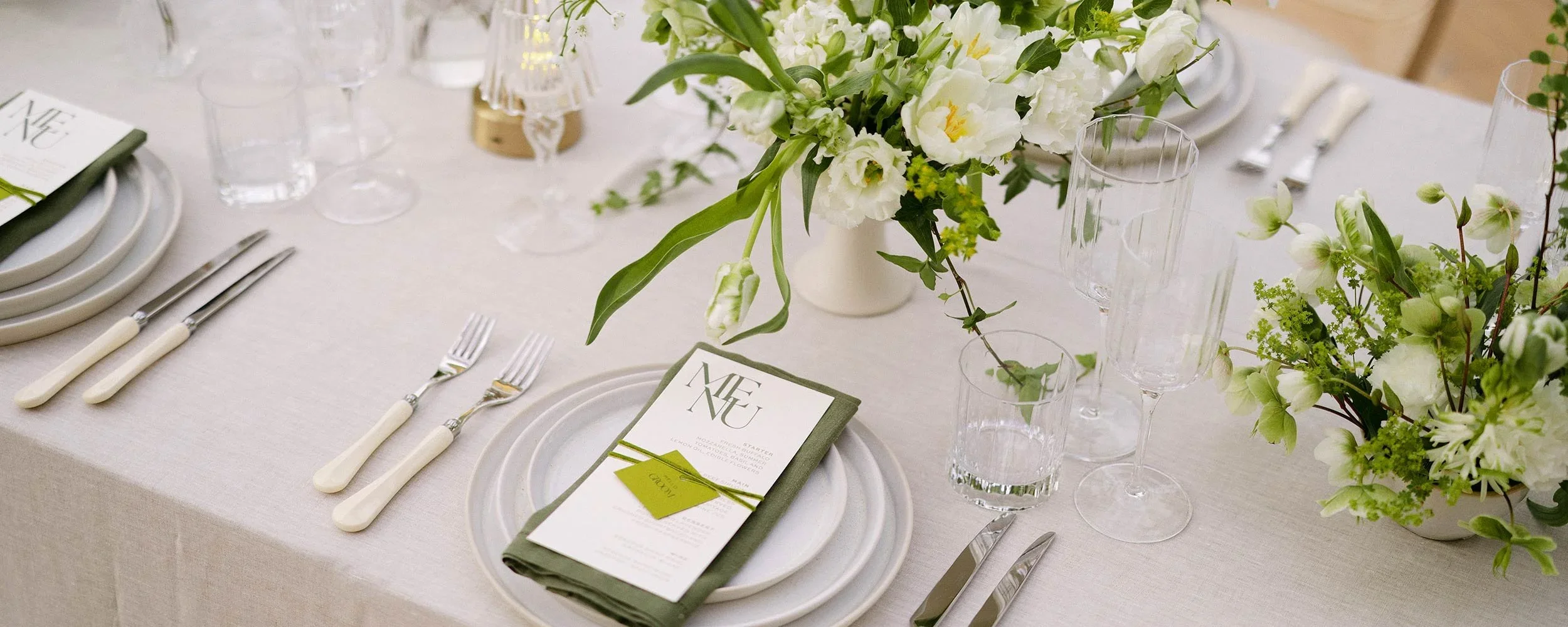
Polyester is the default in most hire catalogues, and it has real virtues. It resists creasing, launders well at high temperatures, holds its colour for years and comes in almost any shade. But the word covers an enormous range, from thin, shiny cloths that float off the table to heavyweight weaves that most guests would never guess were synthetic.
The difference is weight and weave. A lightweight polyester has a uniform, faintly reflective surface: under candlelight it can look plasticky, under a photographer's flash it throws small hotspots of glare, and it tends to bell at the corners and cling with static to chair legs. Many also fluff and pill after repeated laundering. A heavyweight woven polyester behaves very differently. Our Naturals range is exactly that: a dense, premium weave with a matte, textured surface and a fluid fall to the floor, which stays smooth wash after wash. Suppliers who dress tables with our linens tell us it is the feel they notice first. It is the practical, crease-resistant choice for a table that still needs to look considered.
Cotton: crisp, classic and formal
Cotton sits between the two. A good cotton cloth is matte, takes colour beautifully and presses to a sharp, architectural finish, which is why it belongs to the traditional banquet and the classic white damask. If you want a formal look with knife-edge folds, cotton delivers it.
The trade-offs are texture and movement. Cotton is smoother and more even than linen, so it holds less depth in photographs, and it creases readily without the softness that makes a crease look intended. It is lovely in a grand dining room; along a candlelit trestle in a barn or a garden, it can feel a touch stiff.
Linen: the weight, texture and light of flax
Linen is woven from the fibres of the flax plant, one of the oldest textiles we have. Flax fibres are long and strong, and they give linen three qualities no other tablecloth quite matches.
The first is weight. A good linen cloth has a heavier hand, so it falls in a clean, vertical line from the table edge to the floor and stays there, even as chairs are drawn in and out all evening. It is why we size our cloths for a full floor-length drop: the fabric does the rest.
The second is texture. The natural slubs and irregularities of the weave give the surface a quiet, living quality. By day it reads as tactile; by candlelight, those small variations hold shadow and glow, and the table looks warm rather than flat.
The third is how it behaves on camera. Linen is matte without being dull. It absorbs light rather than throwing it back, which gives photographers depth and tone to work with, and no glare. It is often the first thing they ask about.
Linen also softens with every wash, and its gentle creases are part of its character. A freshly prepared cloth relaxes over the course of an evening into something that looks lived in, in the best sense.
And what about linen mixes?
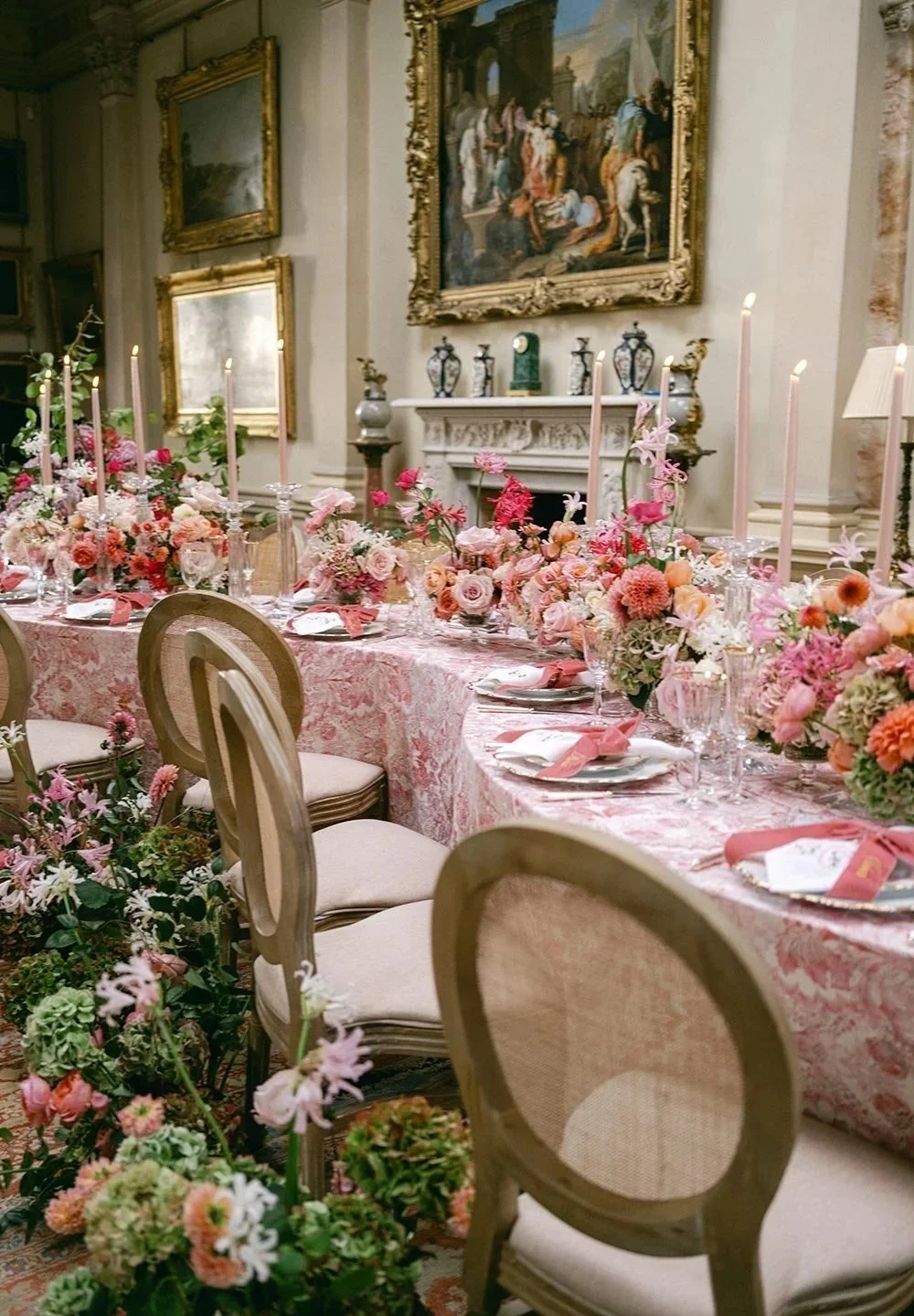
Not every linen-look cloth is linen, and not every linen cloth is pure. Linen mixes blend flax with another fibre to change how the fabric handles. Our patterned tablecloths, for instance, are 60% linen and 40% cotton: the linen gives depth, texture and that weighted fall, while the cotton gives a smoother surface for print, so every line of the pattern reads crisply. Labels such as 'linen-look' or 'linen-effect' are something else again, usually describing a synthetic woven to imitate linen's surface.
None of these is wrong, but they are different things, and it is always worth asking exactly what you are hiring. Our collection spans pure linen, our 60/40 patterned cloths and our heavyweight Naturals, and we will always tell you which is which. We are also one of very few UK suppliers to offer pure linen trestle cloths for hire at all; pure linen napkins are easy to find, but pure linen tablecloths at wedding scale are rare.
The ALBA Note. When you review mood boards with your planner or photographer, look at the edges of the tables, not just the centre. The way a cloth meets the floor is the detail that separates a styled table from a covered one, and it is the part your choice of fabric affects most.
The other half of the story: the width of the cloth
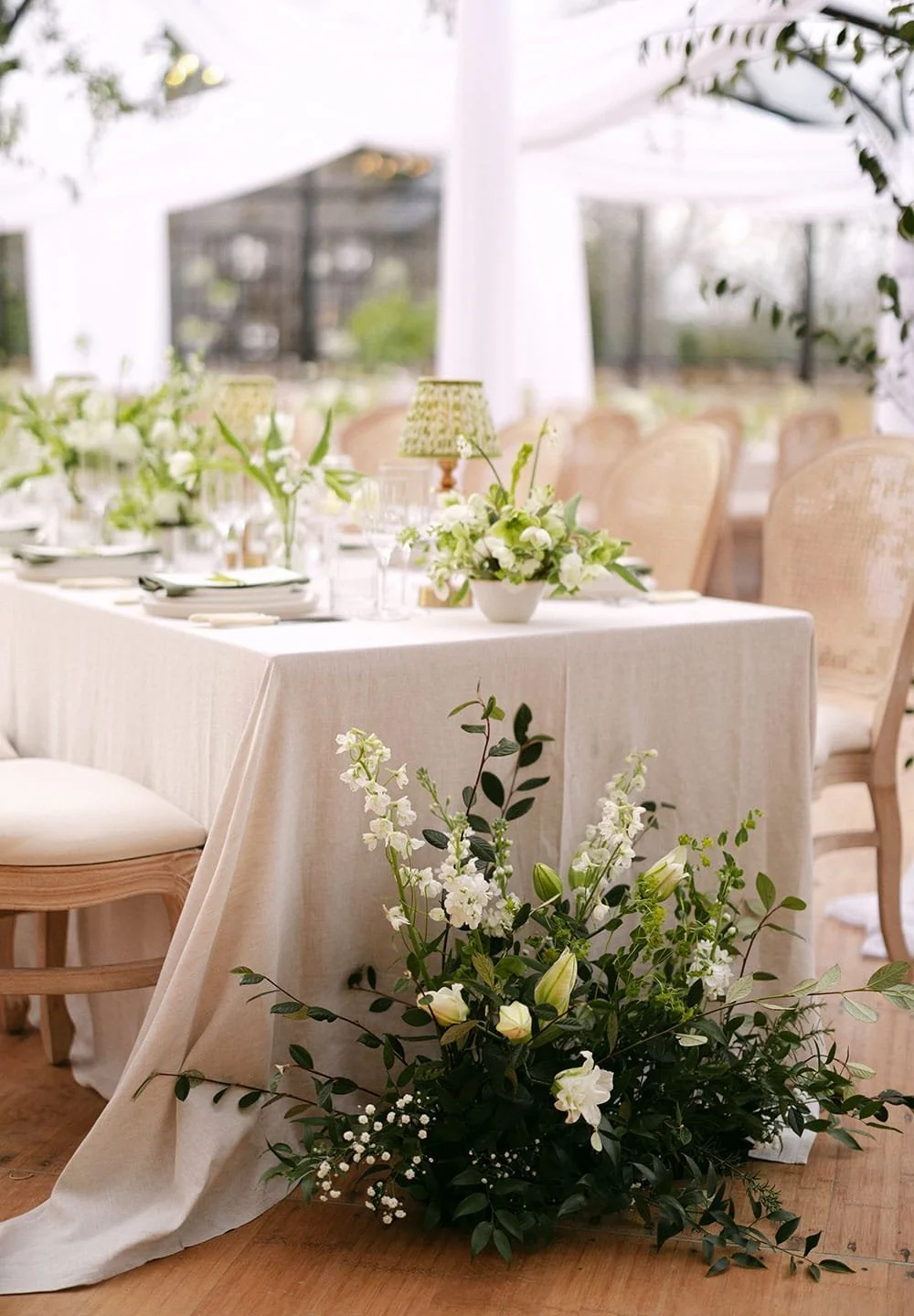
There is one thing fabric guides rarely mention, and it matters as much as fibre: the size of the cloth. The industry-standard trestle cloth is 90 × 144 inches, and many suppliers still hire 70 × 144. On a standard 3ft-wide trestle, a 90-inch cloth stops short of the floor along the long sides, and a 70-inch cloth falls barely halfway, so reaching the floor means doubling up two cloths per table. Anyone who has set a long room this way knows the result: visible seams where one cloth meets the next, cloths slipping out of line as chairs move, and twice the linen to lay and to pay for.
We were one of the first suppliers to commission our own size, 96 × 144 inches, so a single cloth falls cleanly to the floor on every side of a 3ft trestle, in one unbroken line. It is quicker to set, it stays put through the evening, and it costs less in the long run.
Choosing for your day
A formal, traditional dinner: cotton, or a classic white linen for a softer version of the same look.
A country house, barn, marquee or garden: pure linen, for its texture and relaxed, weighted fall.
A patterned or colourful scheme: a linen-mix base gives pattern depth; see our patterned tablecloths.
A large-scale function or a hard-working brief: a heavyweight weave such as our Naturals.
Whichever fabric you choose, fit matters as much as fibre. Our tablecloth size guide explains the sums, and our tablecloth calculator works out the cloths, sizes and spares for your layout. And because our linens travel by tracked courier, the same tables can be dressed anywhere in Britain, from London and the South to the North of England and Scotland.
Questions, answered
Is linen better than polyester for wedding tablecloths?
For texture and depth, pure linen is hard to match: it has weight, a natural slub and photographs without glare. But a heavyweight woven polyester, such as our Naturals range, can drape beautifully and resists creasing. It is the thin, lightweight polyesters that look flat and shiny.
Do linen tablecloths crease?
Naturally, yes, and softly. Linen relaxes through the day, and its gentle creases are part of its character. There is no need to wash hired linen before returning it: our team handles the cleaning.
What is the difference between linen, linen mix and linen-look?
Linen is woven from flax fibres. A linen mix blends flax with another fibre; our patterned cloths are 60% linen and 40% cotton. 'Linen-look' usually describes a synthetic woven to imitate linen's surface.
Why are ALBA trestle cloths 96 inches wide?
The industry standard is 90 × 144 or 70 × 144 inches, which falls short of the floor on a 3ft-wide trestle. Our 96 × 144 inch cloths reach the floor on every side with a single cloth, so there is no doubling up.
Can I see the linen before booking?
Yes. We send linen and napkin samples for a £5 flat rate, or you can visit our showroom in Rendcomb, near Cirencester.
Do you deliver wedding linen outside the Cotswolds?
Yes. Our linens travel by tracked courier across the UK, including London, the South, the North of England and Scotland, which keeps delivery costs down wherever your venue is.
Planning your tables? Our tablecloth calculator works out the cloths, sizes and spares for your layout in a couple of minutes. When you're ready, request a quote or book a showroom visit.
